
What is an Informal Debt Agreement?
An Informal Debt Agreement is an agreement with your creditors laying out new terms for repayments that you both agree to. Its key goal is to make sure that the negotiated repayment plan is manageable based on your budget.
This is not a formal ‘debt agreement’ under the Bankruptcy Act (Part 9 Debt Agreement). It is an informal arrangement negotiated directly with your creditors.

Benefits of an Informal Debt Agreement

In many cases, we’re able to negotiate reduced repayments and, in some situations, a reduction in the overall amount you repay – but this depends on your creditors’ decisions and your circumstances.

Your creditors may agree to reduce, pause or stop interest, depending on their policies and your situation. This is not guaranteed.

Not all debts in your name need to be included, giving you flexibility to choose which debts you tackle.

Contact from creditors or debt collectors often reduces once they see we’re working with you to find a solution. However, we can’t guarantee all contact will stop.

No court process is involved and arrangements are negotiated directly with your creditors. However, your creditors will still keep their own records and may report information to credit reporting bodies where permitted by law.

May help you avoid further serious or long-term negative listings (such as defaults or Bankruptcy) on your credit report, if you keep to the arrangement. Existing listings will not be removed.
NOTE: Informal agreements work best when you have some capacity to make reduced payments, and your and your creditors are willing to negotiate. Many creditors will consider hardship options, but this is always at their discretion.
Book A Free Consultation To See If You Qualify.
How it works: The Informal Debt Agreement process in 5 simple steps
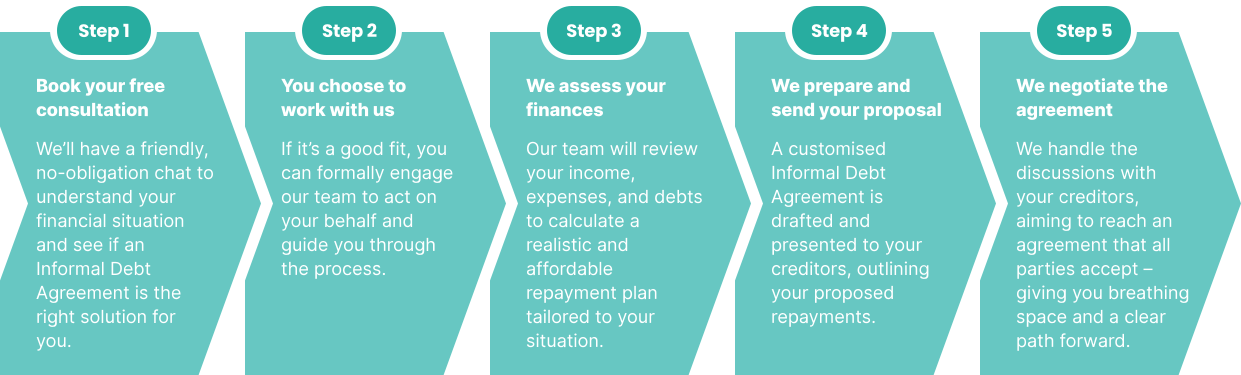
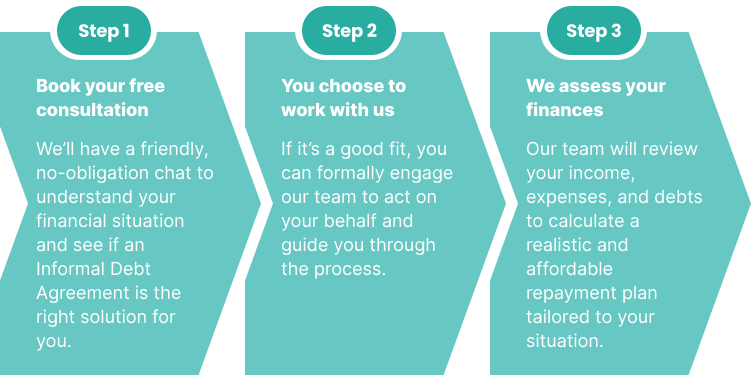
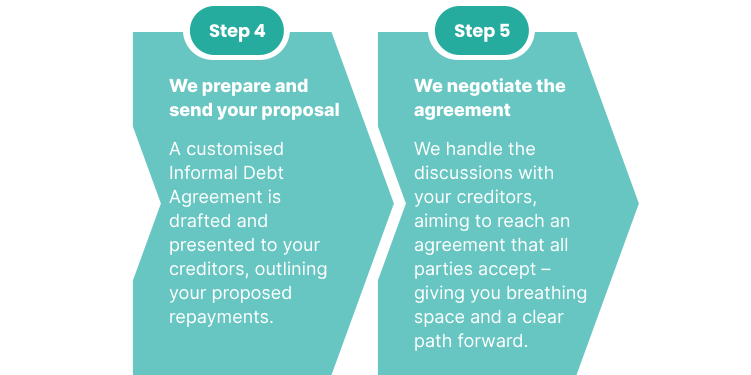
What you need to know about Informal Debt Agreements
* We advocate on your behalf to try to reduce or restructure your payments, but all final decisions rest with your creditors.
What are some other debt repair solutions you may consider?

Debt Consolidation
For some people, a debt consolidation loan can help. For others, it can increase costs or extend the time they stay in debt.
Debt consolidation lenders promise to roll all of your debts into one easy repayment but here’s the downside to dealing with your debt in this way.
- If you have a lot of existing debt or a low credit score, you may find it harder to be approved for a consolidation loan.
- Depending on your credit history and whether the loan is secured, the interest rate on a consolidation loan may be higher or lower than your current rates. It’s important to check the total cost over time, including fees.
It’s important to understand that a debt consolidation loan is another debt, so it’s not fixing up your debt problem, it’s extending it.
Bankruptcy
Bankruptcy might seem like a quick fix, but it’s a drastic financial step to take.
It means you’ll lose control over your financial affairs, and an official trustee will be appointed to manage your assets and debts. While it can prevent creditors from pursuing you, the long-term consequences of Bankruptcy are significant:
- Your assets (home, car, belongings) could be sold to pay off your debt.
- Strict limits will be placed on your earnings and financial activity.
- Your name will be permanently recorded on the National Personal Insolvency Index, affecting your ability to obtain credit in the future.
- You’ll be restricted from traveling overseas without permission and can’t serve as a company director.
- Bankruptcy does not cover all debts—some obligations may still remain after the Bankruptcy period ends.
While Bankruptcy is a legal option, it can have long-term consequences on your lifestyle, financial independence, and future opportunities. It’s not to be taken lightly.
Certain debts (e.g. child support, some fines, some student debts) may not be discharged. Some assets may be protected (e.g. necessary household goods).


Part 9 Debt Agreement
A Part 9 Debt Agreement is another formal insolvency option that allows you to settle your debts without becoming fully bankrupt.
A Part 9 Debt Agreement is a formal insolvency option under the Bankruptcy Act. It is an alternative to Bankruptcy, but still has serious consequences.”
If you enter a Part 9 Debt Agreement, it will be recorded on your credit report and listed on the National Personal Insolvency Index for a number of years, which can make it harder to get credit, rent a property or get certain jobs.
In a Part 9 agreement, you’ll work with a debt agreement administrator to pay back a portion of your debts over time, but this will still impact your financial record and potentially restrict your ability to conduct business or access credit in the future.
It’s important to understand that a Part 9 Debt Agreement doesn’t release you from all types of debt, and can complicate your financial situation in the long term.
NOTE: Formal options like Bankruptcy or Part 9 Agreement may be more appropriate in some situations, for example if you have no capacity to pay anything or already have multiple court judgments. You should speak with an independent financial counsellor and/or legal adviser before deciding. Before considering debt consolidation, Bankruptcy or Part 9 Agreement, you can speak with a free, independent financial counsellor by calling the National Debt Helpline on 1800 007 007, or visit their website, to explore all your options. The best way to explore your debt relief option is to book a complimentary call with our team.